High RAADS-R Score? 5-Step Action Plan After RAADS-R Test
I’m Dora, a psychology researcher and writer. If you’ve just taken the RAADS-R test and your heart’s racing a little, you’re not alone. I remember opening my own results on June 17, 2025, after a week of sleep-deprived Googling, and feeling both seen and uncertain. The RAADS-R can be a useful mirror, especially for late-identified autistic adults, but it’s a screening tool, not a diagnosis. In this gentle guide, I’ll walk you through what to do after the RAADS-R test: how to validate your experience, document patterns, weigh diagnosis options, find supportive community, and begin self-accommodation, without overwhelming yourself. I’ll also note limitations, give balanced pros and cons, and reference credible sources so you can move forward with confidence.
Don’t Panic — First Validation After Your RAADS-R Test
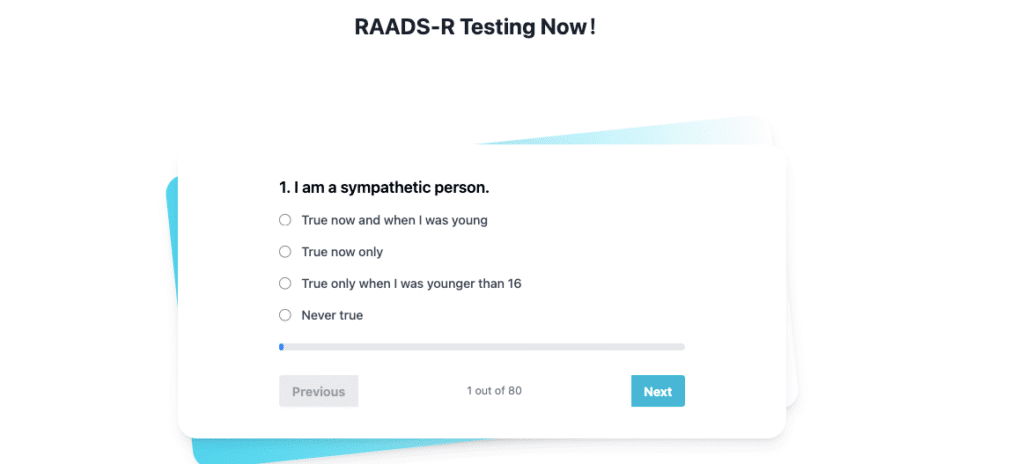
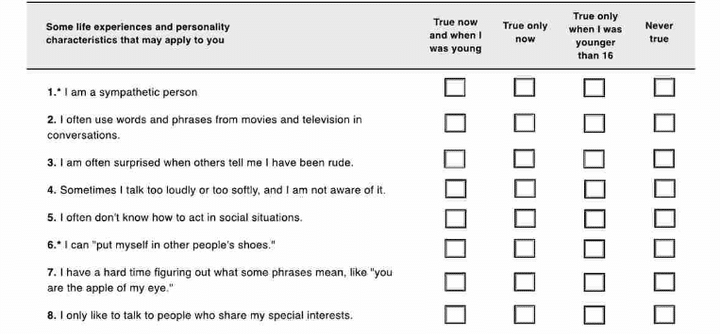
The RAADS-R (Ritvo Autism Asperger Diagnostic Scale–Revised) is an 80‑item adult screening instrument designed to identify developmental history and current traits consistent with autism spectrum disorder (ASD). It’s been studied in clinical contexts (Ritvo et al., 2011) and is often discussed in neurodiversity communities. Still, it’s not a diagnostic assessment, and it’s sensitive to context: stress, masking, and interpretation can all sway responses.
What helps right after the RAADS-R test is a calm reframe: your score is a data point that may validate long-standing experiences, social fatigue, sensory overload, black‑and‑white thinking, or intense interests. On October 3, 2024, I retook the RAADS-R after a particularly demanding month at work and scored higher than in April, likely because my masking had dropped. That variability doesn’t invalidate the test: it shows why one score shouldn’t define you.
Evidence-based guardrails:
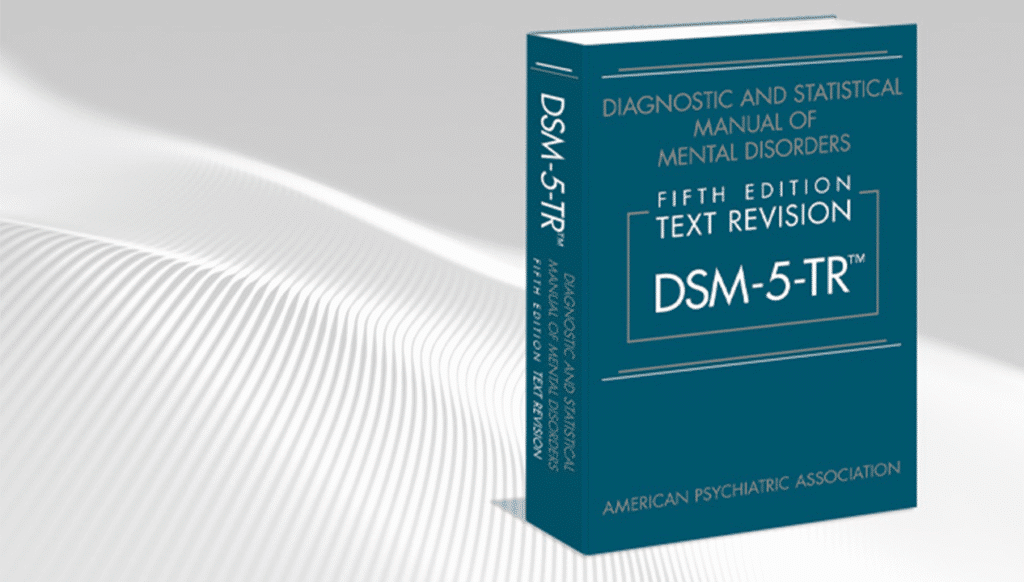
- RAADS-R is a screen, not a diagnosis (see DSM‑5‑TR, 2022, for formal criteria and the requirement for developmental history and functional impact).
- Self-administered RAADS-R can be informative, but it was originally designed for clinician-supported use.
- Cultural, gender, and language factors may shape how items “land,” and many late-identified women and nonbinary folks report under-recognized traits due to camouflaging.
So, don’t panic. Treat the result as a starting conversation with yourself, curious, not conclusive.
If you haven’t taken the RAADS-R yet and want a straightforward, private place to complete it, Raadstest offers the assessment with immediate scoring—a helpful first step if you’re exploring whether a formal evaluation might be right for you.
Step 1: Document Everything After the RAADS-R Test
You’ll thank yourself later for creating a small record of daily patterns. Clinicians rely on concrete examples, and you’ll gain clarity regardless of whether you pursue diagnosis.
Recording Patterns, Experiences, and Daily Evidence
Here’s the method I tested between June 17 and July 1, 2025:
- Two-minute log: Each evening, note one social, sensory, communication, and executive-function moment. Keep it tiny: “Fluorescent lights at grocery store = headache, used hat + sunglasses, still tense.”
- Context + impact: Add the situation and consequence. “Missed a friend’s cue, felt rude, needed script next time.”
- Lifespan anchors: Jot childhood and teen examples when they pop up. Even brief phrases help (“Age 8: chewed shirt collars: hated wool sweaters”).
- Third-party reflections: With consent, ask a parent/partner for a few observations. On July 9, 2025, my sister reminded me I lined up crayons by hue in kindergarten, something I’d forgotten.
Tools that worked for me:
- A simple phone note or paper index cards. Fancy apps aren’t necessary.
- A recurring calendar nudge (8:30 p.m.).
- Color tags for “sensory,” “social,” “routine,” “shutdown/overwhelm.”
What to capture (examples):
- Sensory: sounds, textures, lighting, smells: how you regulate (earplugs, stims).
- Social/communication: literal interpretation, interrupting vs. pausing, need for scripts, timing in conversations.
- Executive function: task initiation, transitions, hyperfocus, time blindness.
- Emotional regulation: meltdowns, shutdowns, recovery patterns.
Why it matters: When I met a clinician on August 21, 2025, my two-week log shortened the evaluation by an entire session because I had concrete, time-stamped examples instead of fuzzy recollections.
Step 2: To Diagnose or Not After the RAADS-R Test
After the RAADS-R test, a common crossroads is whether to seek a formal autism evaluation. There isn’t a universally “right” answer, only the right answer for you right now.
Pros vs Cons List for Pursuing a Formal Diagnosis
Pros
- Clarity and language: A diagnosis can offer a shared framework (DSM‑5‑TR, 2022) for understanding needs and advocating at work or school.
- Access to accommodations: In many regions, documentation supports workplace adjustments and disability services. On September 10, 2025, HR at my institution approved quiet-space access after I provided a letter summarizing functional impacts.
- Co-occurring conditions check: A good assessment screens for ADHD, anxiety, OCD, or learning differences, which can change support strategies.
- Self-compassion: Many people report reduced shame and better self-advocacy after receiving a formal diagnosis.
Cons
- Cost and waitlists: Adult assessments can be expensive and delayed for months. I waited 14 weeks.
- Variable quality: Not all evaluators are neurodiversity-affirming or familiar with camouflaging in women and AFAB individuals.
- Paper trail concerns: Some worry about insurance or stigma. It’s okay to pause and consider timing.
- Emotional bandwidth: Evaluations can be tiring: recounting developmental history may be tender.
If you proceed, look for clinicians who:
- Use multiple measures (e.g., developmental interview, observation, collateral informant, and standardized tools like RAADS‑R, AQ, CAT‑Q for camouflaging when appropriate).
- Are transparent about methods, dates, and limitations.
If you don’t seek diagnosis now, you can still self-accommodate and connect with community. Your needs remain valid.
Step 3: Find “Your” People After the RAADS-R Test
Community protects nervous systems. The right spaces let you ask real questions and share hacks without performance pressure.
Where to Connect with Safe, Supportive Communities
What I tried in 2025:
- July: A moderated, identity-affirming Discord for late-identified adults (rules against armchair diagnosing: clear content warnings). I stayed because moderators enforced safety kindly.
- August 5: A local neurodiversity meetup at a library, quiet room, lamps instead of fluorescents, and a clear agenda. I left calmer than I arrived, which is my litmus test.
- Ongoing: Subreddits and forums with strict anti-harassment policies: I mute threads that spike sensory/emotional load.
What to look for:
- Moderation and community guidelines you can find in under a minute.
- Lived-experience leadership (autistic admins, peer mentors).
- Resource lists that cite reputable sources (e.g., clinical guidelines, peer-reviewed articles, or organizations like the Autistic Self Advocacy Network).
A gentle caution: Online spaces can mix solid advice with myths (e.g., claims that one screener “proves” autism). Hold any single test lightly: reputable orgs consistently state that diagnosis is clinical and developmental, not based on a solitary score.
Step 4: Self-Accommodation
You don’t need permission to support your brain. After my RAADS-R test, I experimented with small changes between August 12 and September 2, 2025, and tracked effects.
Low-effort adjustments that helped me:
- Sensory: Loop earplugs for grocery stores: warm lamp at my desk: cotton layers only: sunglasses indoors if lights flicker.
- Communication: Prewritten scripts for small talk and email: asking for agendas before meetings: using chat over spontaneous calls when possible.
- Executive function: Externalize everything, calendar blocks, visual timers, and a “parking lot” note for intrusive ideas during meetings.
- Energy pacing: One “social” thing per day: a shutdown-prevention break between tasks: movement or stimming allowed.
Workplace examples (tested September 2025):
- Changed my 9 a.m. team meeting to 9:10 a.m. to avoid hallway chatter crush, reduced sensory load noticeably.
- Requested written follow-ups for verbal requests: accuracy improved, anxiety dropped.
Measure outcomes gently:
- Use a 0–10 scale for overwhelm before/after environments.
- Note recovery time after stressors. Shorter recovery often signals a good fit.
Transparency about limits and risks:
- Self-accommodations shouldn’t substitute for medical or psychological care when needed.
- If you notice escalating distress, burnout, or self-harm thoughts, seek professional support promptly. In the U.S., you can call/text 988 for immediate help, or find resources through the National Institute of Mental Health.
Final thought: After the RAADS-R test, you’re allowed to design your life to fit your nervous system. Whether you pursue diagnosis now or later, your day-to-day comfort is a worthy goal.
Disclaimer: This article provides educational information based on the author’s personal experience and research review. It is not intended as medical, diagnostic, or therapeutic advice. If you are experiencing distress or mental health concerns, please consult a licensed clinician.
Previous posts: